
The Four Cs, In Plain English.
Cut, color, clarity and carat are the shared language for describing a diamond. The Gemological Institute of America (GIA) developed the system in the mid-20th century, and it lets two people compare stones they have never seen side by side.
A grade report tells you a lot, but not everything. The useful question is what each grade means for the diamond you will actually see on your hand.
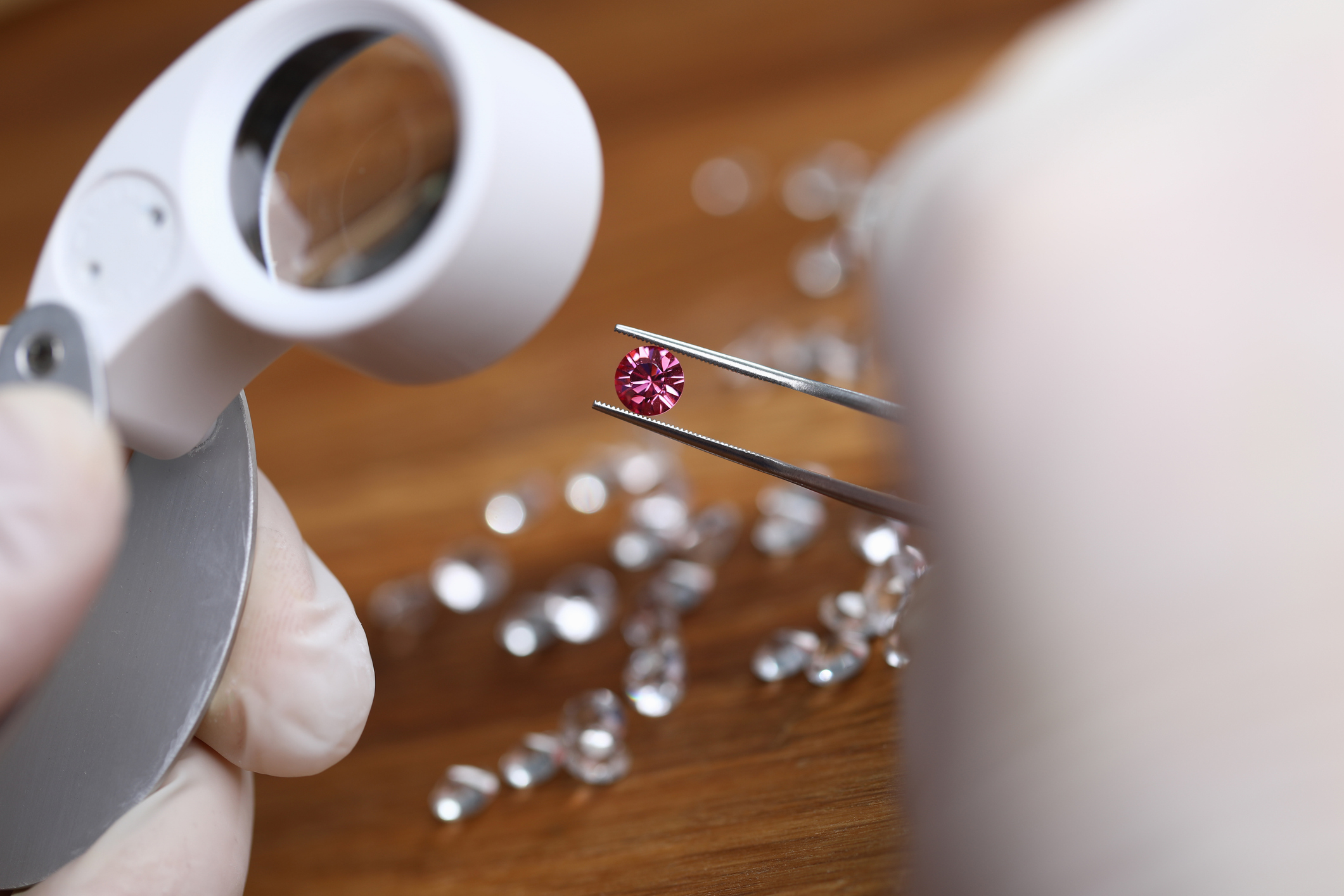
Cut: Where the Sparkle Comes From
Cut is the only one of the Four Cs shaped entirely by people, and it has the greatest effect on beauty. It describes how well a diamond’s angles, proportions and finish handle light, and it should not be confused with shape. A round diamond and an oval diamond are different shapes, and either one can be cut well or poorly.
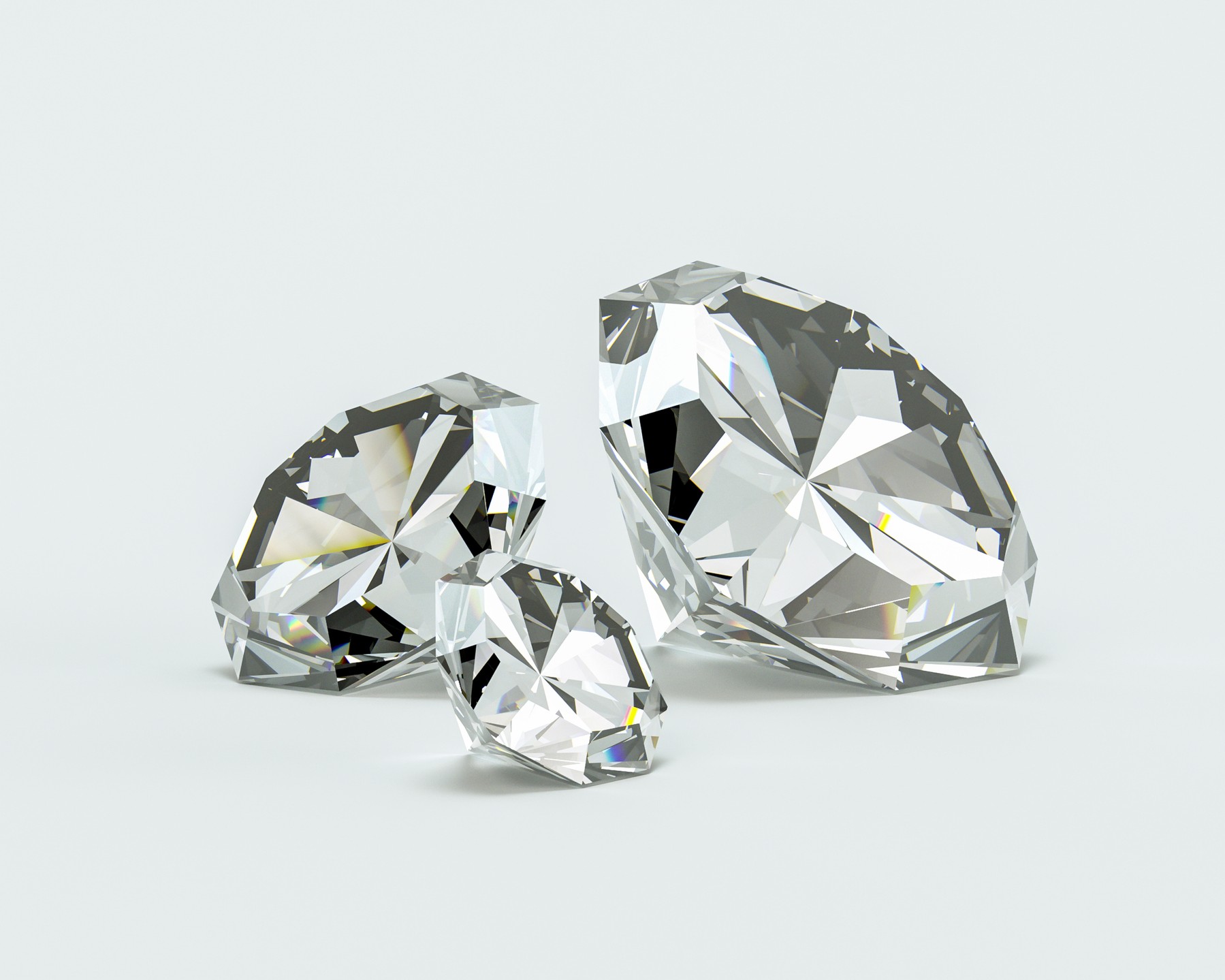
In a well-cut stone, light enters through the top, reflects inside and returns to your eye. If the stone is cut too shallow or too deep, more of that light escapes and the diamond can look glassy or dark, whatever its color and clarity grades say.
Brightness
The white light returned from the diamond, both inside and off its surface.
Fire
Flashes of color created as the diamond splits white light into a spectrum.
Scintillation
The play of light and dark sparkle you see when the diamond or the light moves.
| GIA cut grade | What to expect |
|---|---|
| Excellent | The strongest light return and a crisp, even pattern |
| Very Good | Bright and lively; the difference from Excellent is often subtle |
| Good | Attractive, with less sparkle; often a good value in smaller stones |
| Fair | Noticeably less brilliant; light escapes through the sides or base |
| Poor | Dull or dark, with significant light loss |
Color: Grading the Absence of It
White diamonds are graded on how little color they have. The GIA scale runs from D, which is colorless, to Z, which shows a light yellow or brown tint. The tint usually comes from traces of nitrogen trapped as the crystal formed.
The differences between neighboring grades are slight and are judged by comparing stones under controlled conditions. Many people cannot see a one-grade difference once a diamond is set, even though the price changes.
| Grade | Category | What you will notice |
|---|---|---|
| D–F | Colorless | No visible color; the rarest and most costly white diamonds |
| G–J | Near colorless | Little or no color face-up; often the best value |
| K–M | Faint | A soft warmth, more visible in larger stones |
| N–R | Very light | A clear yellow or brown tint |
| S–Z | Light | An easily visible tint |
Clarity: Natural Marks of Formation
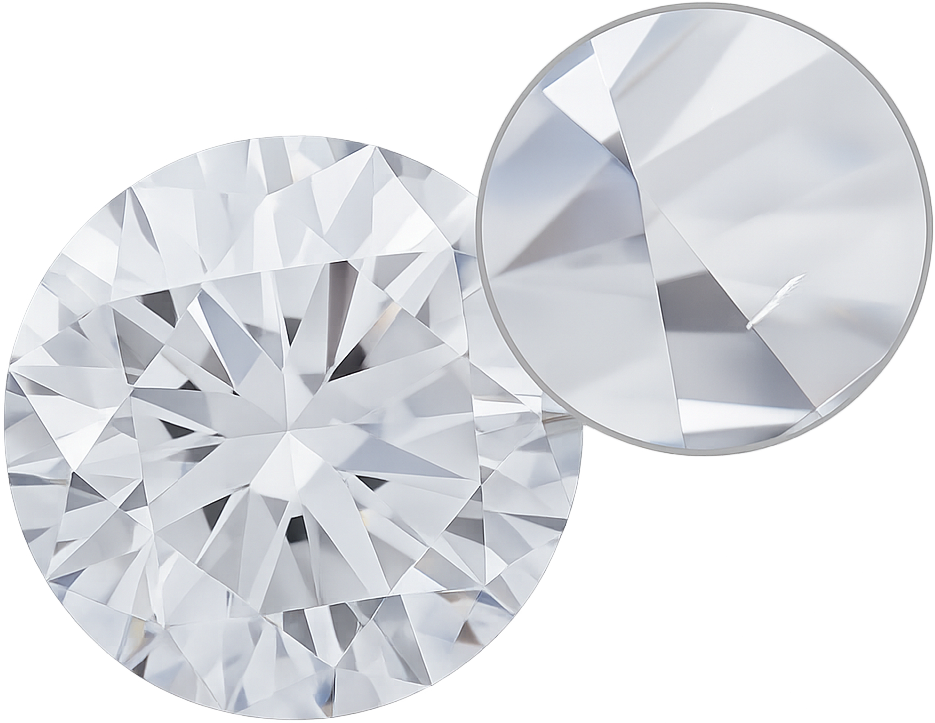
Almost every diamond contains tiny features from its formation deep in the earth. Internal features are called inclusions, and surface features are called blemishes. Graders assess their size, number, position, nature and visibility under 10x magnification.
A grading report often includes a plot, a small map of the diamond’s main features. It is worth reading: one inclusion under the table can be more noticeable than several tucked near the edge.
| Grade | Name | Under magnification and to the eye |
|---|---|---|
| FL / IF | Flawless / Internally Flawless | No inclusions at 10x; FL also has no blemishes. Extremely rare |
| VVS1–VVS2 | Very, Very Slightly Included | Very difficult for a skilled grader to see at 10x |
| VS1–VS2 | Very Slightly Included | Minor features at 10x; usually not visible to the eye |
| SI1–SI2 | Slightly Included | Noticeable at 10x; some stones are eye-clean, so check each one |
| I1–I3 | Included | Obvious at 10x and often visible; may affect durability or brilliance |
Carat: Weight, Not Size
One carat equals 0.2 grams, and each carat is divided into 100 points, so a 0.75-carat diamond is also called a 75-pointer. Carat measures weight, which means two 1-carat diamonds can look different in size depending on how they are cut.
Prices tend to step up at popular weights such as 0.50, 1.00 and 2.00 carats. A 0.95-carat stone can look almost the same as a 1.00-carat stone and may cost noticeably less.
| Carat weight | Typical round diameter |
|---|---|
| 0.50 ct | About 5.2 mm |
| 0.75 ct | About 5.9 mm |
| 1.00 ct | About 6.5 mm |
| 1.50 ct | About 7.4 mm |
| 2.00 ct | About 8.2 mm |
| 3.00 ct | About 9.4 mm |
Where to Spend, and Where to Save
No single grade makes a beautiful diamond, and top grades in every category are rarely necessary. For most people, this order of priorities makes the budget go furthest.
Start With Cut
Choose the best cut your budget allows. A strong cut adds life to a stone and can make slight color or small inclusions less noticeable.
Settle on Color
Consider your metal, then look near the G to J range. Compare in person to find where a lower grade stops looking white to you.
Aim for Eye-Clean
VS stones are often eye-clean, and carefully chosen SI stones can be too. Spending beyond eye-clean buys rarity more than visible beauty.
Fit the Carat
Choose the size with what remains. Shopping just under a popular weight can free up budget without a visible loss in size.
See the Difference in Person
Grades make more sense with diamonds in front of you. Visit Avitabile Fine Jewelers in Hanover and compare stones side by side with our team.