
Buy a Diamond With Confidence.
Diamond shopping can feel technical quickly, and most people do it only a few times in their lives. You do not need to become a gemologist. You need a clear order of decisions and a few questions to ask.
This guide walks through how to narrow your choices, what to check on a grading report, and where buyers most often go wrong.
Five Decisions, in Order
Making decisions in the right order keeps a long list of specifications manageable. Each step narrows the field before you begin comparing individual stones.
Set Your Budget
Decide on a comfortable total, and remember to include the setting, sizing and insurance. There is no rule for how much you should spend.
Choose a Shape
Shape has the greatest effect on the overall look and is a matter of personal taste. If the diamond is a surprise, look for clues in the jewelry they already wear.
Find Your Size Range
Decide on the carat range that feels right on the hand, keeping finger size and setting style in mind.
Prioritize Cut
Look for strong cut quality first. For round diamonds, that usually means GIA Excellent or Very Good.
Adjust Color and Clarity
Lower these grades step by step until you reach the point where you can see a difference. Then stay just above it.
Every Diamond, Chosen by Hand
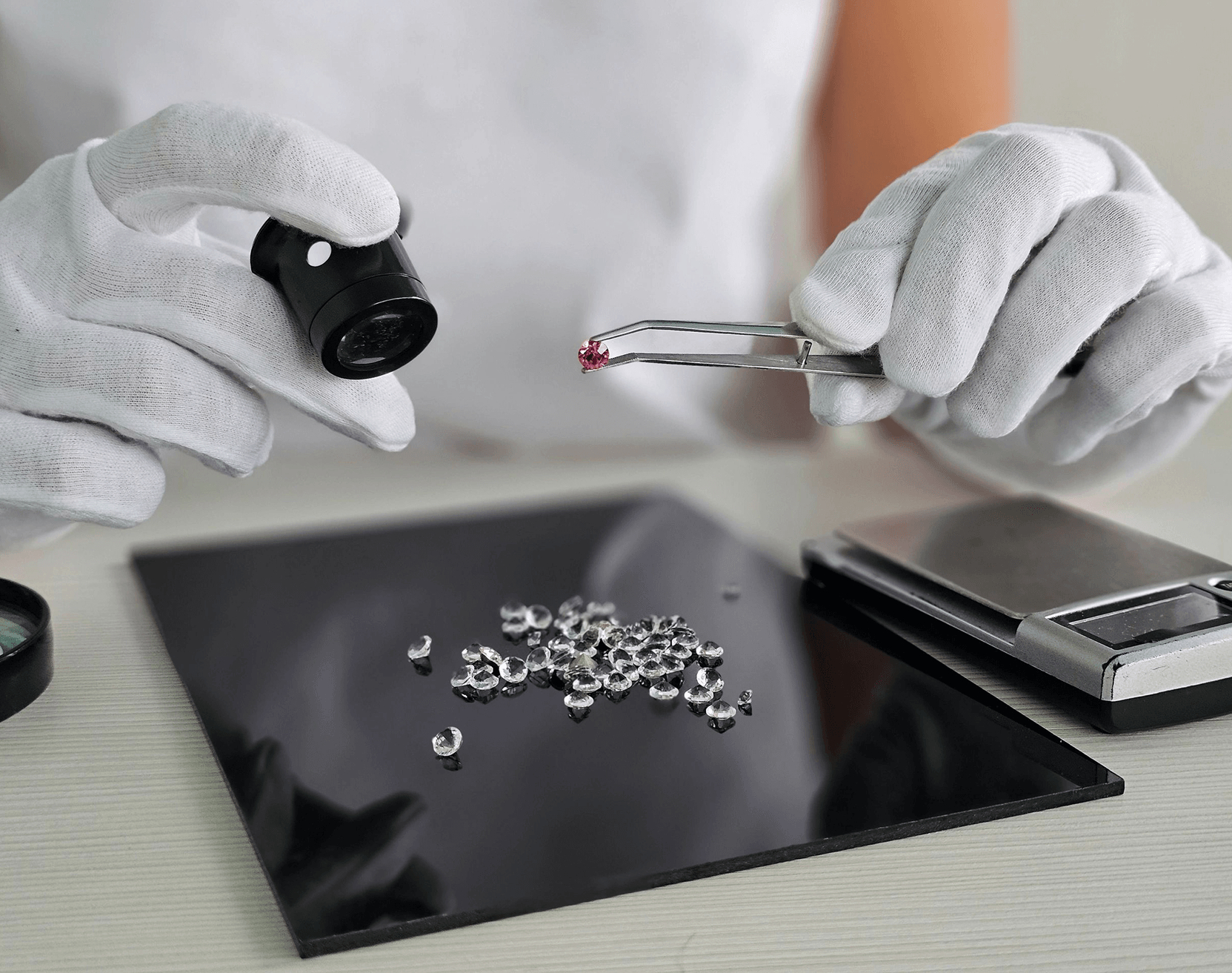
Before a diamond joins our collection, a member of our team examines it in person. We look at how it handles light, where its inclusions sit and how its color reads face-up, not only at the grades on its report.
It is the kind of attention a family business can give. By the time you sit down with us in Hanover, every stone in front of you has already passed that first careful look, and you can compare them with confidence.
Why We Want You to See a Diamond in Person
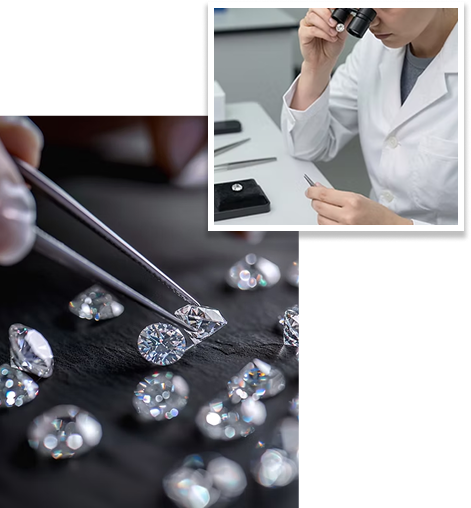
We never choose a diamond from paperwork alone, and we don’t think you should either. A grading report is an essential starting point, but it can’t capture everything. Two diamonds with identical color and clarity grades can look noticeably different side by side, and their prices can differ just as much.
That’s why we invite you to compare diamonds with us in person. Our team will walk you through what the report says, point out what it leaves out, and help you find the stone that looks best to your own eye.
Two Stones, Same Grades, Different Look
Reports narrow your search, but they do not describe everything. Two diamonds with matching grades can differ in price and appearance, and these details help explain why.
Proportions
Very deep stones carry weight underneath, where you cannot see it, so they can look small for their carat weight. Compare millimeter measurements as well as carats.
Fluorescence
Some diamonds glow, usually blue, under UV light. Often it has no visible effect, and it can even flatter warmer stones. Very strong fluorescence occasionally causes a hazy look, so view those stones in person.
Inclusion Placement
A small inclusion under the table is easier to see than a larger one near the edge, where a prong may even cover it. The plot on the report shows you where to look.
Lighting
Bright spotlights make almost any diamond sparkle. Look at a stone in daylight and ordinary room light too, because that is how you will usually see it.
Read the Report, Not Just the Summary
A diamond grading report is an independent laboratory’s assessment of a stone. It is what allows you to compare diamonds fairly, and you should ask for one with any significant purchase. A report is not an appraisal: it describes quality but does not assign a dollar value.
Laboratories do not all grade with the same strictness, so two reports showing the same letter may not describe equal stones. GIA and AGS are widely respected for natural diamonds. Whichever lab issued a report, compare stones by what you can see as well as what the paper says.
Do
- Confirm the report number online with the issuing laboratory
- Match the report number to the laser inscription on the girdle, when the stone has one
- Check for any treatments the report lists, such as clarity enhancement or color treatment
- Ask whether the diamond is natural or laboratory-grown; the report should state its origin
Don’t
- Compare prices across different labs as if the grades were interchangeable
- Rely on a grade from a store’s own in-house certificate alone
- Treat a report as proof of value; for insurance you will need an appraisal
Where Buyers Go Wrong
Shopping by Carat Alone
A larger diamond with a weak cut can look smaller and less lively than a smaller stone with a strong cut.
Paying for Invisible Grades
The step from VS2 to VVS1, or from G to E, raises the price and is hard to see once the diamond is set.
Skipping Disclosure Questions
Clarity treatments and laboratory-grown origins should always be disclosed. Ask directly, and get the answer in writing.
Rushing the Decision
Time-limited discounts and pressure to decide today are good reasons to slow down. A reputable jeweler will give you time to compare.
Overlooking the Setting
A setting affects how large a stone looks, how well it is protected and how comfortably it wears. Consider both together.
Skipping Protection
Get written documentation, ask about the return policy, and arrange insurance as soon as you bring the piece home.
Sourcing and the Kimberley Process
Conflict diamonds are rough diamonds used to finance armed movements against recognized governments. The Kimberley Process Certification Scheme, launched in 2003, requires participating countries to track international shipments of rough diamonds and certify them as conflict-free.
The scheme has been an important step, though it also has critics, who point out that its definition is narrow and does not address every human rights or environmental concern. It is reasonable to ask any jeweler where a diamond came from and what they know about its path to market.
A Final Checklist
Before you buy, confirm that
- You have viewed the diamond in more than one kind of light
- The report comes from a recognized independent laboratory, and its number checks out
- The diamond looks clean to your eye from a normal viewing distance
- Any treatments and the diamond’s origin have been disclosed
- Your receipt lists the diamond’s grades, weight and report number
- You understand the return policy, resizing options and any warranty
- You have a plan to insure the piece
Talk It Through With Us
Bring your questions, your budget and any ideas to Avitabile Fine Jewelers in Hanover. We will show you diamonds side by side and explain the differences.